
Such a continuous flow of funds ensures you purchase raw material and produce goods uninterruptedly. Adequate Net Working Capital ensures that your business has a smooth https://www.bookstime.com/ operating cycle. This means the time needed to acquire raw material, manufacture goods, and sell finished goods is optimum. You should use a net working capital calculator once a month or at least quarterly.
Latest articles and insights
- They are common in statistics, social sciences, economics, finance, accounting.
- HighRadius leverages advanced AI to detect financial anomalies with over 95% accuracy across $10.3T in annual transactions.
- In order to help you advance your career, CFI has compiled many resources to assist you along the path.
- First, add up all your current liquid assets and anything that will become liquid within the next year.
- The net working capital (NWC) formula is a crucial financial metric used to assess a company’s operational efficiency and short-term financial health.
If the working capital in Year 2 is and in Year 1 was 23000, the change in working capital is 4000. The interpretation of either working capital or net working capital is nearly identical, as a positive (and higher) value implies the company is financially stable, all else being equal. Consider spreading asset sales across multiple years or using tax-loss harvesting to manage your income relative to the phase-out thresholds. Converting traditional IRA funds to a Roth IRA increases your MAGI in the year of conversion. If you plan to do Roth conversions, consider keeping your total MAGI below the phase-out thresholds to preserve the full deduction. Alternatively, do larger conversions in years when you wouldn’t qualify for the deduction anyway.
- Inventory is another asset that may not be as liquid as you’d like, and may not be the best source of cash should you need to pay short-term debt off quickly.
- It is a measure of a company’s liquidity and its ability to meet short-term obligations, as well as fund operations of the business.
- In financial accounting, changes in working capital are primarily reflected in the Statement of Cash Flows, specifically in the “cash flows from operating activities” section when using the indirect method.
- And current liabilities include accounts payable, short-term debt, and accrued expenses.
- A well-managed NWC supports sustainable growth, enhances creditworthiness, and improves valuation outcomes.
Learn best practices for purchasing, finance, and more
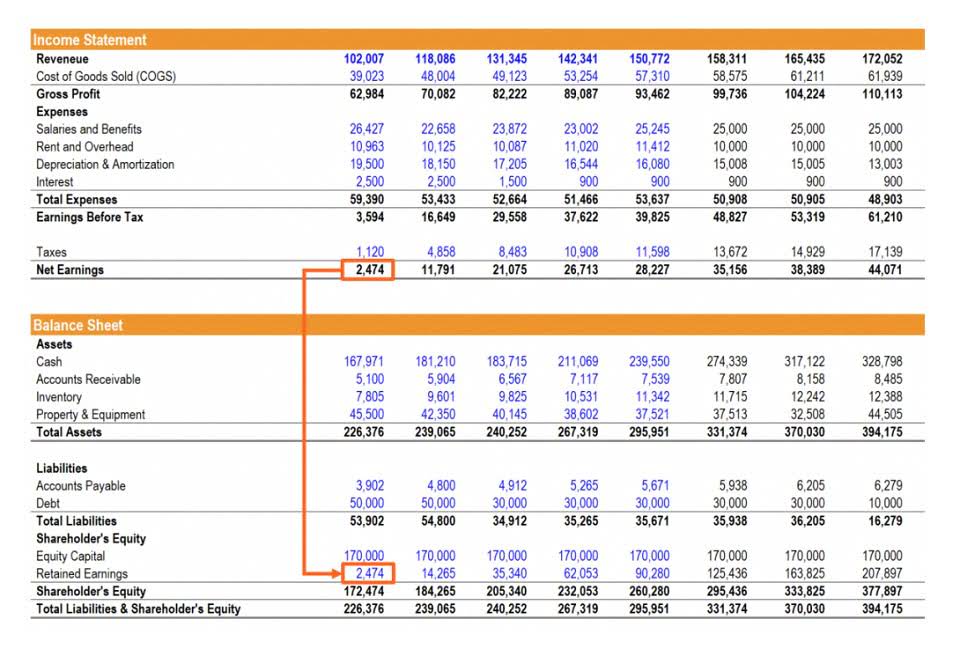
Since the growth in operating liabilities is outpacing the growth in operating assets, we’d reasonably expect the change in NWC to be positive. Even though the payment obligation is mandatory, the cash remains in the company’s possession for the time being, which increases its liquidity. As for accounts payables (A/P), delayed payments to suppliers and vendors likely caused the increase. To calculate the change in net working capital (NWC), the current period NWC balance is subtracted from the prior period NWC balance. Some people also choice to include the current portion of long-term debt in the liabilities section. This makes sense because although it stems from a long-term obligation, the current portion will have to be repaid in the current year.
We Help Businesses Transform & Grow.
Positive changes indicate improved liquidity, while negative changes may suggest financial strain. For instance, suppose a retail company experiences an positive change in net working capital increase in sales, resulting in higher accounts receivable (A/R) due to credit sales. At the same time, the company effectively manages its inventory levels and negotiates https://www.vilhome.de/calculating-receivables-turnover-ratio-definition/ favorable payment terms with suppliers, resulting in slower growth in accounts payable (A/P). Simply put, net working capital is a measure of your business’s short-term liquidity, operational efficiency, and, to some degree, short-term financial health. It refers to the difference between your company’s total current assets and total current liabilities.
Operating Working Capital or Non Cash Working Capital

In contrast, net working capital accounts for current liabilities, providing a clearer picture of a company’s ability to cover its immediate financial obligations. This differentiation is critical for businesses assessing their overall financial position. Calculate the change in working capital based on change in net working capital formula current assets and liabilities.
- Conversely, negative free cash flow suggests a company may need to raise money.
- An increase in working capital often means you’ve invested cash into assets like inventory or accounts receivable.
- This may lead to more borrowing, late payments to creditors and suppliers, and, as a result, a lower corporate credit rating for the company.
- In simple terms, net working capital (NWC) denotes the short term liquidity of a company.
- Remember, you need to reduce the time period between completing production and sending invoices to your customers.
- When a company has excess current assets, that amount can then be used to spend on its day-to-day operations.
A well-considered approach can strengthen your financial position and enhance cash flow. It plays a crucial role in ensuring business liquidity and operational efficiency. A healthy net working capital enables a company to invest in new opportunities, manage day-to-day operations effectively, and withstand financial fluctuations. Companies with adequate NWC can respond swiftly to market demands, maintain supplier relationships, and enhance customer satisfaction by ensuring that they have sufficient resources available when needed.